

Unwanted noises while, out on a ride can be off-putting and distracting. Creaking or clicking while pedaling may have various causes, and they are usually minor issues that can be silenced with a simple adjustment. It may take some investigation and trial and error to initially track down the source of the noise, but the fix is often times simple. This article will go over the most common mechanical sources of clicking we see on our bikes and how to make them go away.
Pedals
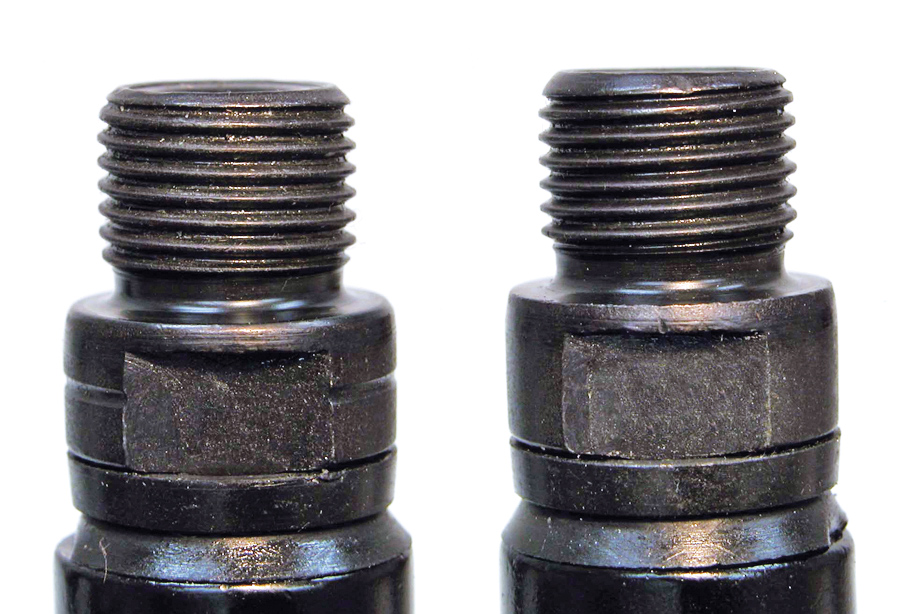
Pedals are one of the first things we recommend checking on your bike if you are hearing noises while riding. This is because pedal threads easily attract road debris and are a very easy component to double-check. You should be very familiar with how the pedals are installed in the bike since this was a mandatory step in the assembly of your bike, but as a reminder, the left side pedal is backwards threaded, while the right is normal threaded.
When checking pedals, it is a good idea to fully remove them from the cranks and thoroughly clean the threads of any grease and dirt since a small amount of dirt or gravel in the threads can cause crunching or clicking when pedaling. Once clean, the threads can be greased and installed straight and tight into the cranks just as you did upon assembly of your bike.
Cranks
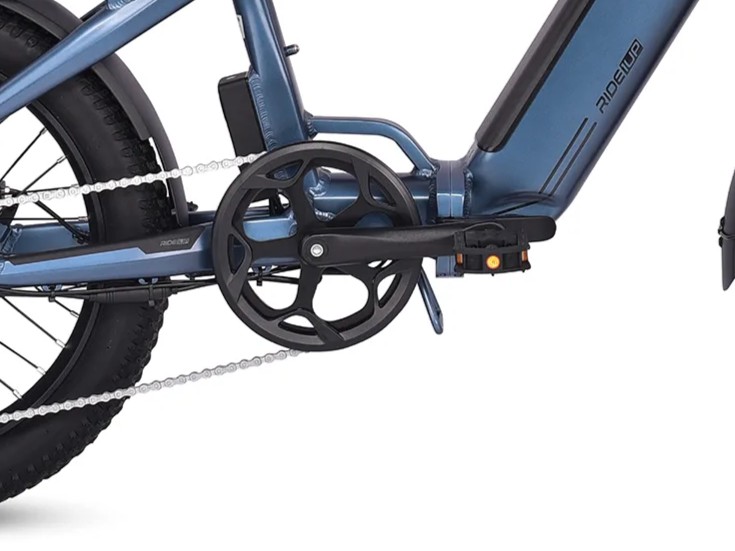
Loose cranks are a very common source of clicking noises and usually cause a click every pedal stroke. If not resolved soon, the crank arm can actually become damaged. The taper fit will no longer match with the spindle well, and your cbutk arm will need to be replaced. Hopefully, you have caught it in time, but that is not the case. Like many things on a bike, if something is not right, you should determine the cause and resolve it before it creates more issues or becomes unsafe.
When checking your crank arms, it is best to add grease to the spindle to ensure a great, tight fit and quiet any noises stemming from there. The crank arm and spindle are tapered to fit together. Adding grease can make it easier to tighten the crank arm bolt properly and keep things quiet. You will need a crank puller to complete this if you have already installed your crank arms. For further information on cranks and how to remove and install them, see the below article.

Bottom Bracket
Much like the cranks, a loose bottom bracket can cause a creak or click with every pedal stroke. This is also something that should be dealt with as soon as possible because leaving this loose can allow the bearings to wear. Bottom brackets will all include a left and right cup that thread into the frame independently. When checking a bottom bracket, it is best to remove both cups, clean and inspect the threads to remove any dirt, then grease the threads and reinstall the bottom bracket into the frame.
Many of our models use standard cartleft-hand brackets, which consist of a lea ft hand threaded threaded non drive side and regular threaded drive side cup that can be tightened independently with the use of a standard BBT-22 tool. The only thing nonstandard about these bottom brackets is that they could have the cadence sensor attached to it which will simply pull in instructions for removing a bottom bracket can be seen through the article linked below.
Some of our other models use bottom brackets with electronics built into them for the pedal assist. These types of bottom brackets look very similar to standard bottom brackets but do have to be removed in a specific way in order to prevent damage to the sensors or wiring. The links below will lead to further instructions on how to remove the bottom brackets with integrated sensors.
- LMT'D Torque Sensor Removal/Replacement
- Roadster V3 Motor Controller/Bottom Bracket (Torque Sensor) Removal
- Revv 1: Cadence Sensor Removal and Installation
- Vorsa Bottom Bracket Removal/Replacement
- Rift Bottom Bracket: Controller and Bottom Bracket Access
Cassette/Cog lockring
Regardless of how many gears came on your bike, they will be held onto the rear wheel hub with a lockring that threads into the freehub. This lockring can loosen up over time and can cause a noise when pedaling that unlike a crank or bottom bracket, does not align with pedal strokes. These lock rings require a cassette tool like the Park Tool FR-5.2 and the rear wheel to be removed from the bike to check and tighten. The below video shows how a cassette or cog lockring can be tightened.
Other Sources of Noise
We find that the above checks help to resolve the most common sources of clicking or creaking on our bikes but there are many possibilities for minor issues that could be causing a noise. If possible, it is a good idea to try to narrow down the source of the noise to a singular or group of components. Here are a few questions to answer to help narrow this down as a starting point for investigating the noise further.
Do you hear the noise when riding the bike while turned off?
- If yes, you will know this is not a problem with the electronics.
Do you hear the noise coasting without pedaling?
- If yes, the noise is likely coming from the wheels, hubs, or suspension.
Do you hear the noise in only a few or single gear?
- If yes, your derailleur or derailleur hanger may need to be adjusted.
Do you hear the noise once or twice each pedal stroke?
- If yes, the noise may be coming from the cranks, pedals, chain, or cassette. It may be a good idea to double-check the things above!
Do you hear the noise if you stand over the bike, pull up on one side of the handlebars, while pushing down on the other repeatedly?
- If yes, the noise may be coming from a loose stem or headset.
Answering these questions will help to narrow the issue down to a group of components but a trial and error checks may be needed to resolve the noise. Feel free to reach out to our knowledgeable customer support team with a video showing the noise on your bike for further assistance.


